Read the ground before you pay for the dig
We read the public record on the sewer lateral under an address — what the soil does to buried pipe, whether the city or you pays for it, and what a fair price looks like — so a scary quote can be checked against something other than the person who wrote it.
Independent reference · no obligation
- Soil corrosivity per address
- Every price has a dated source
- Who-pays rules cited to city code
- No account needed

Check the soil around a sewer line
USDA soil survey under the address: corrosivity to iron and steel pipe, shrink-swell movement, water table. No account required.
Usually 1–3 seconds. The USDA service occasionally takes longer.
The pipe under your yard has a public record.
The lateral — the pipe between your house and the city main — is in most cities the owner's problem, and almost nobody is told what ground it was buried in or what the repair should cost until the day a camera operator names a number. We put that public record in one place, per address.
- No account, no signup
- Sources linked at every figure
- Who-pays rules cited to municipal code
- Says when the ground is gentle on pipe, too
Start with what the house is doing
Signs of a sewer lateral in trouble
Eight things homeowners notice first. Each line says what the sign usually means and what the ground under the address has to do with it. None of them is a diagnosis; the camera footage is.
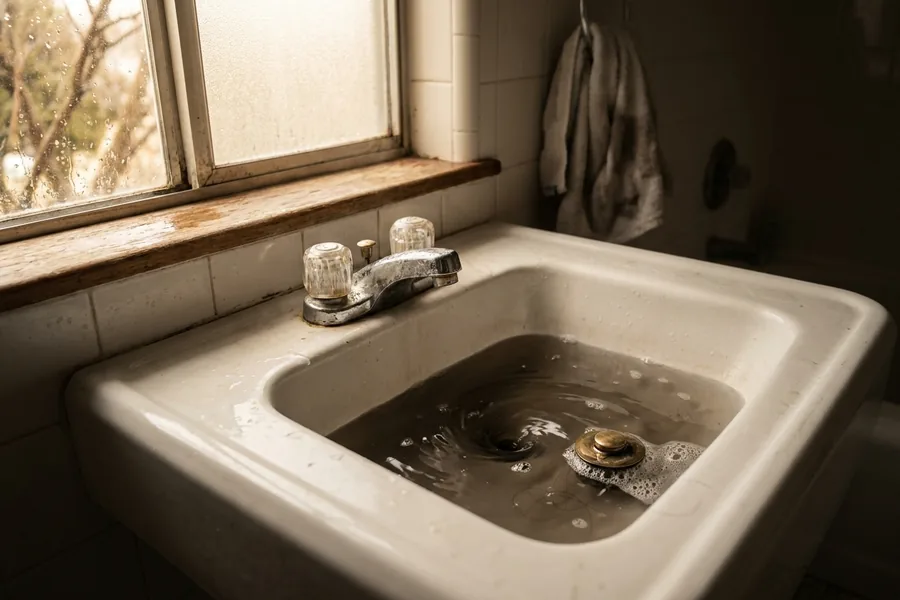
Every drain in the house is slow at once
One slow drain is that fixture's plumbing; every drain slow together points past the house, at the lateral. That's a line problem, not a plunger problem.
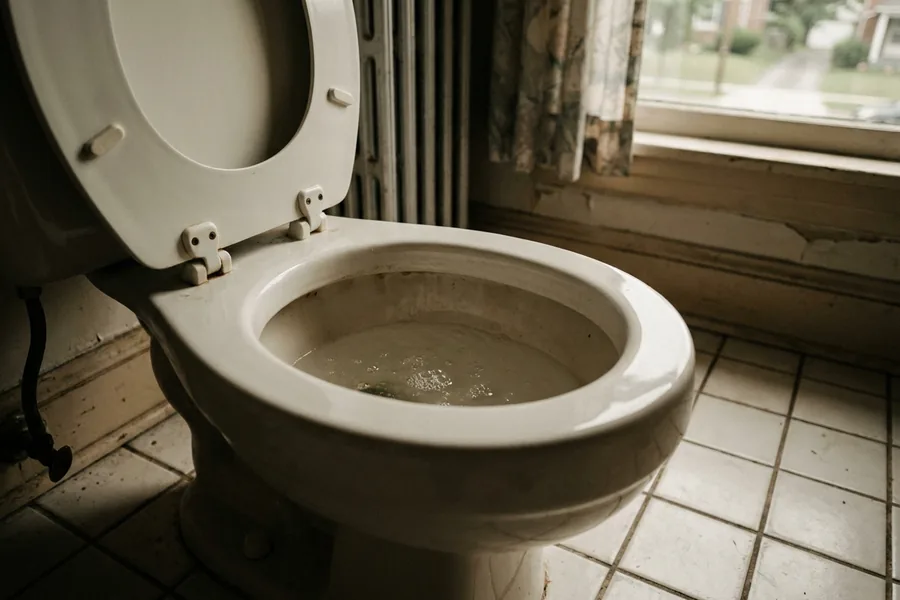
Gurgling from the toilet when other water runs
Air being pulled through the trap because the line beyond it is partly blocked. Often the first audible sign of roots or a bellied section.
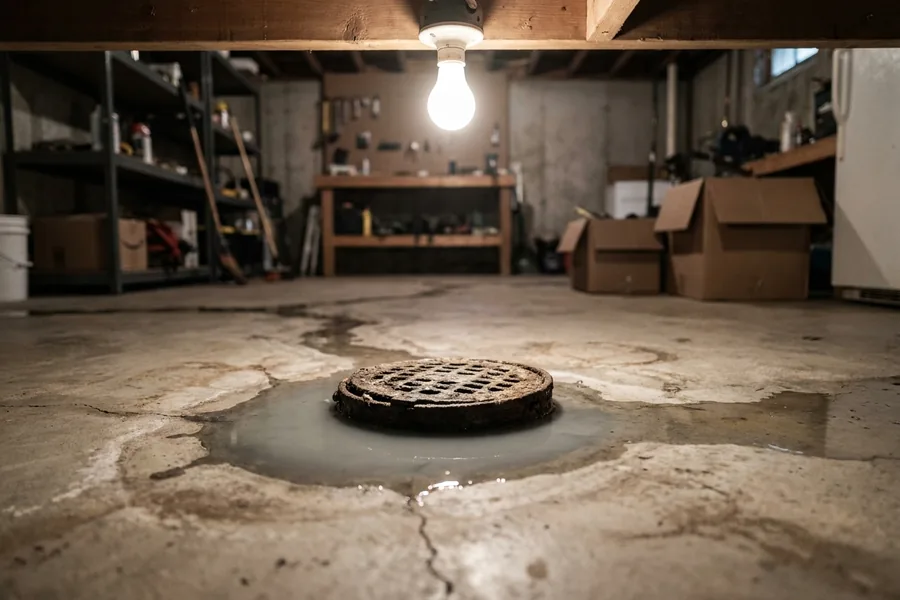
A backup at the basement drain
When the lateral blocks, sewage exits at whichever drain sits closest to the ground — a basement floor drain or ground-floor shower. Where it comes up tells you nothing about where the blockage is; a camera does.
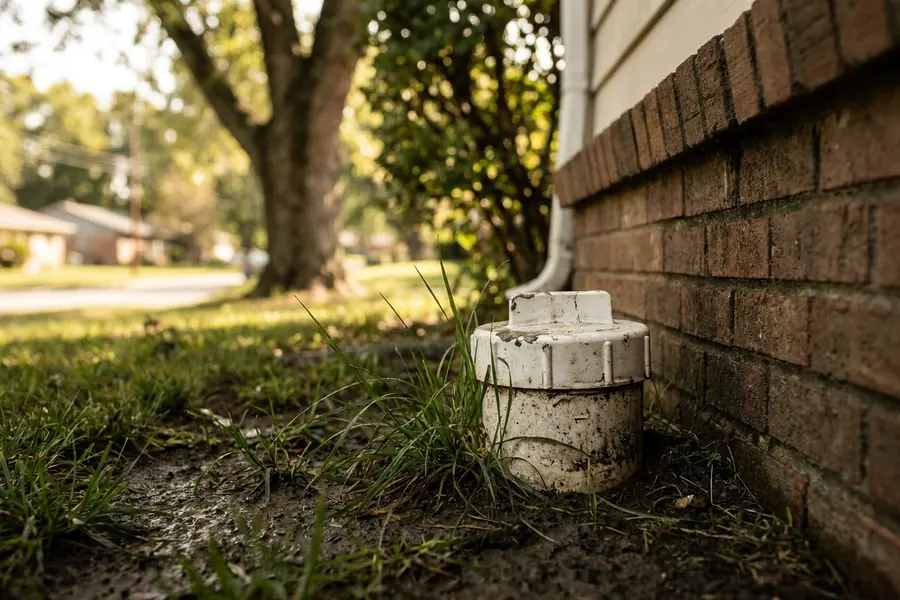
Sewage smell in the yard or basement
Gas from a cracked pipe, a dried trap, or effluent leaking into the ground. From one dry trap it's harmless; with a wet lawn strip nearby it isn't.
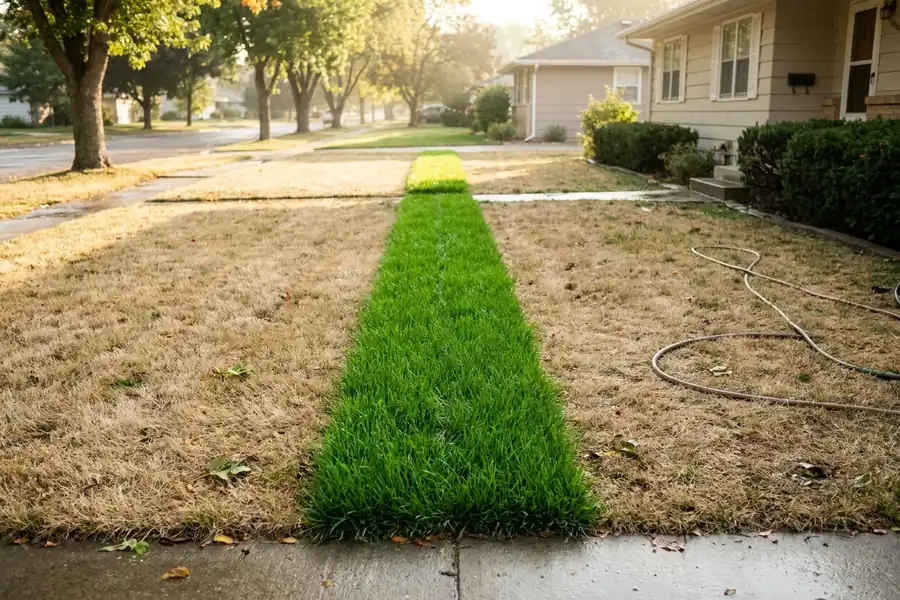
A green, lush stripe across the lawn
A leaking lateral fertilizes the grass directly above it. The stripe usually traces the pipe's actual path — worth photographing before anyone quotes a dig.
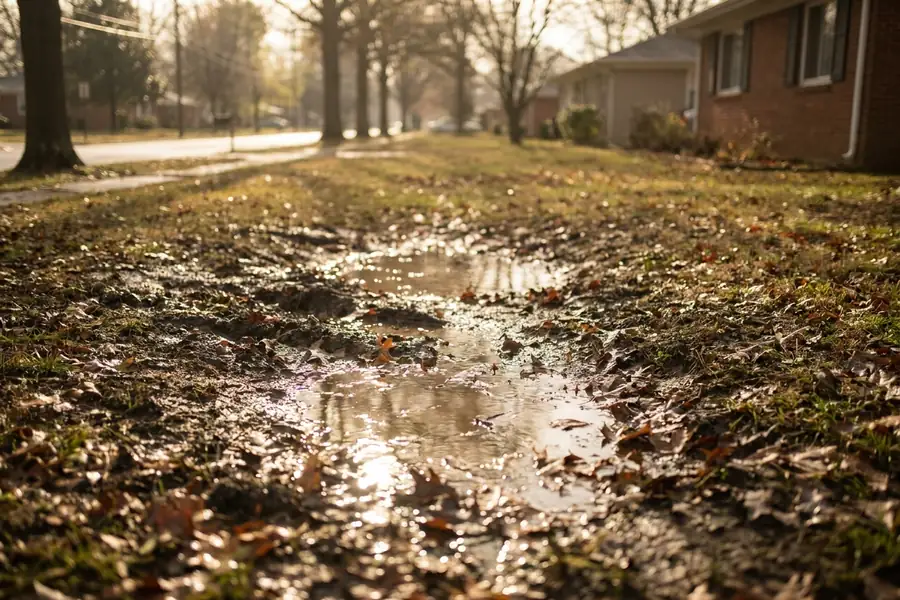
A soft, wet or sunken strip over the line
Soil washing into a broken pipe, or a trench settling. In expansive clay this is also what seasonal ground movement does to the backfill over an old trench.
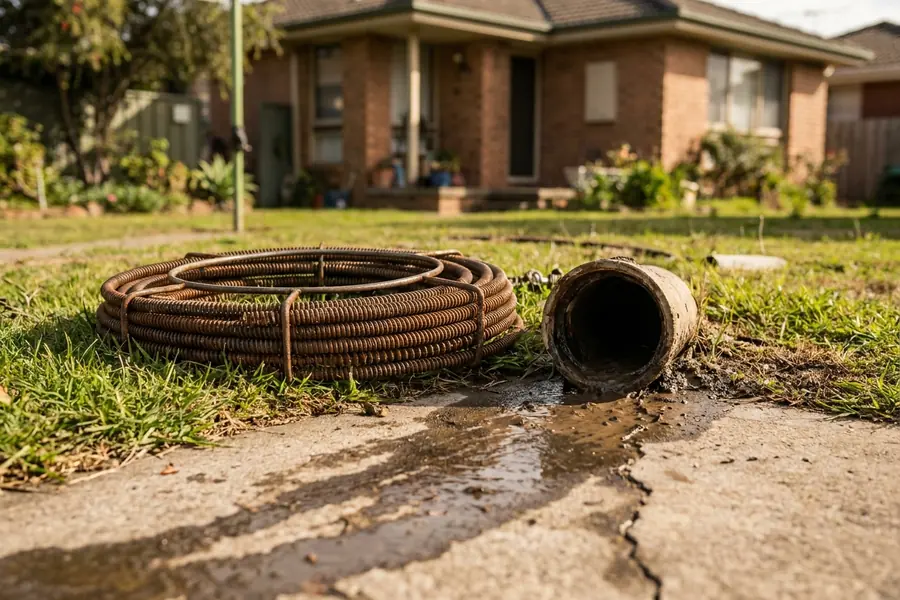
Clogs that come back weeks after snaking
A cable clears the blockage but not the cause. Recurring clogs on the same line usually mean roots, a low spot holding water, or a collapsing section — the camera question.
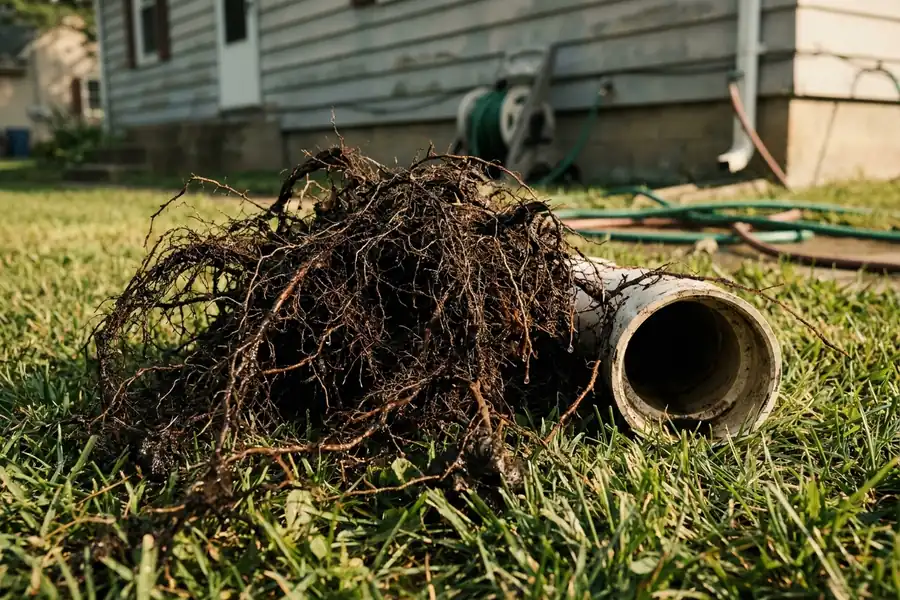
Roots on the snake, or at the cleanout
Roots enter at joints and cracks, not through intact pipe. Finding them confirms there is an opening — how bad it is, and whether lining or a spot repair fixes it, is what the footage decides.
Seeing one of these? Read the ground under the address before anyone quotes a full replacement.
📞 Call (970) 238-2885How it works
Three things to know before you sign anything
Whose pipe it is
In most cities the lateral is the owner's, sometimes all the way to the main — but the rule is written in your city's code, not in a contractor's van. Check your city's rule before accepting that the whole job is yours.
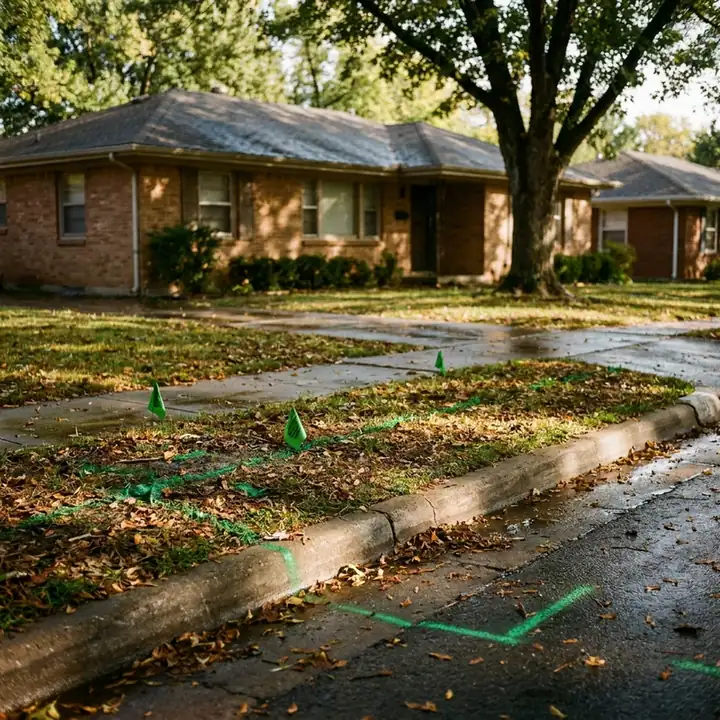
What the ground has been doing to it
The USDA survey records how corrosive the soil is to iron pipe and how much it moves between seasons. That's the mechanism behind most honest “your line is failing” verdicts — and the check on dishonest ones.

What the fix should cost, by method
A spot repair, a lining, a pipe burst and an open-trench replacement are four different jobs with four different prices. A quote that doesn't say which one it is can't be compared.
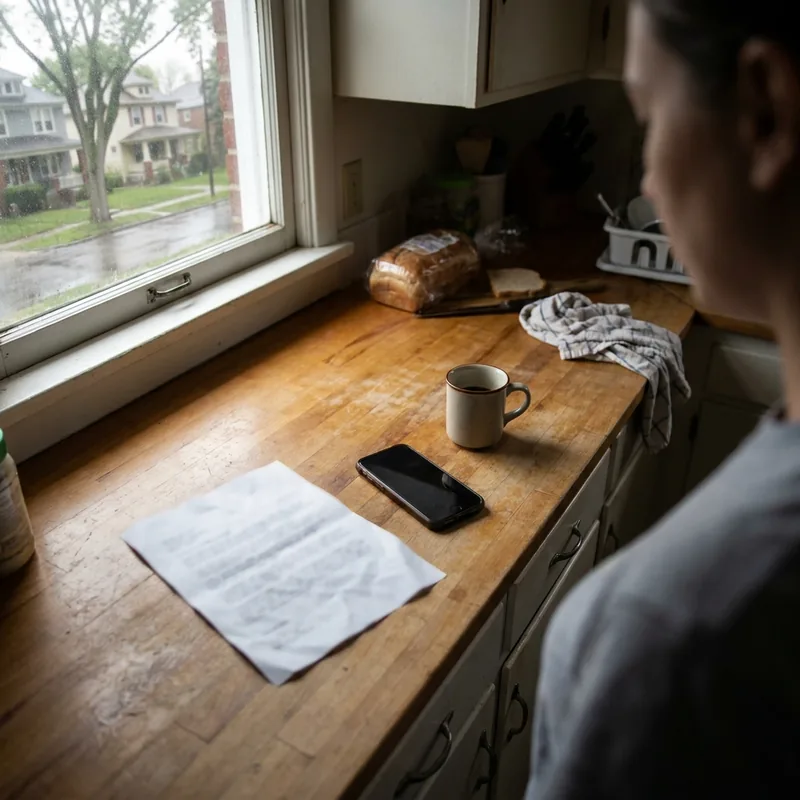
Most quotes collapse three separate questions — whose pipe, what's wrong, what it costs — into one number. Take them one at a time.
The moat
What each soil field decides
The six fields the lookup reads, where each comes from in the USDA survey, and the sewer-line decision it feeds.
| Field | Survey column | What it decides |
|---|---|---|
| Corrosion risk, uncoated steel | component.corsteel | What the ground does to cast-iron and steel pipe walls. High-rated soil eats old iron laterals from the outside; Low-rated soil makes 'the soil destroyed your pipe' a claim to question. |
| Corrosion risk, concrete | component.corcon | The same read for concrete pipe and mortared joints — some laterals and many city mains are concrete. |
| Linear extensibility (shrink-swell) | chorizon.lep_r | How much the ground moves between wet and dry seasons. Expansive clay shears rigid, jointed pipe — clay tile and cast iron — at the joints. |
| Clay content | chorizon.claytotal_r | The ingredient behind shrink-swell. High-clay profiles hold moisture roots seek, and they move. |
| Water table, minimum annual depth | muaggatt.wtdepannmin | Whether groundwater stands at pipe depth part of the year — the driver of infiltration through bad joints, and of dewatering line-items in excavation quotes. |
| Drainage class | component.drainagecl | How wet the trench will be when it's opened, and how the backfill behaves after. |
Corrosion and shrink-swell class definitions follow the USDA NRCS Soil Survey Manual, ch. 3 — risk of corrosion and shrink-swell (LEP) classes.
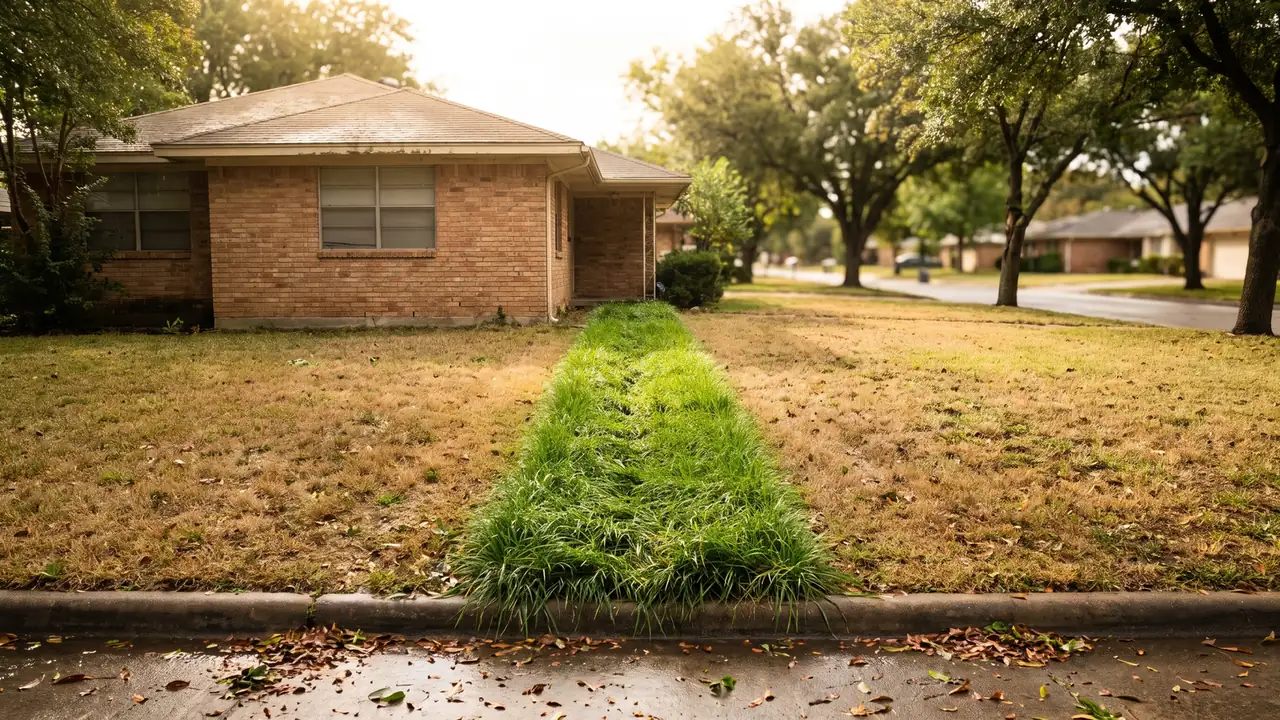
A leaking lateral often introduces itself as the greenest stripe in the lawn, tracing the pipe's path.
Proof, not promises
Tested on real addresses
The lookup chain, run on real addresses chosen to span the corrosion and shrink-swell range — reproducible with the tool above.
| Address | Corrosion, steel | Corrosion, concrete | Shrink-swell | Clay % |
|---|---|---|---|---|
| 815 W Mistletoe Ave, San Antonio, TX 78212 | High | Low | moderate | 45 |
| 7400 E 29th Ave, Denver, CO 80238 | Moderate | Low | moderate | 29.93 |
| 4747 SE Woodstock Blvd, Portland, OR 97206 | Low | Moderate | low | 16.88 |
The spread is the point: on the same public dataset, some of these addresses sit in ground rated High for corroding steel pipe and some in ground rated Low. Same cast-iron lateral, very different odds — and very different plausibility for the same sales pitch. Methodology and data sources →
Questions, answered
Sewer laterals: what people ask
What is Sewer Line Record?
An independent reference on residential sewer laterals, built on public records: the USDA soil survey for what the ground does to buried pipe, each city's own rules on who pays, and published cost guides — linked and dated wherever a page quotes a price.
What does the soil lookup actually tell me?
What the USDA survey records for the mapped soil under the address: its corrosion risk for uncoated steel and for concrete, how much it shrinks and swells between seasons, its clay content, the shallowest the water table gets in a year, and its drainage class. Those are the conditions your lateral has been buried in for decades. The lookup describes the ground, not the pipe sitting in it.
Can the soil really destroy a sewer pipe?
It can be a real mechanism: the survey rates some soils High for corrosion of uncoated steel, which is the material family cast-iron laterals belong to, and expansive clay measurably moves with moisture and loads the joints of rigid pipe. But 'can' is not 'did'. The rating tells you whether the story you're being sold is plausible in this ground; only camera footage shows what actually happened to your pipe.
Whose pipe is it — mine or the city's?
In most US cities the property owner is responsible for the lateral, often all the way to the main, not just to the property line. But the split varies city by city, and it changes what you should be quoted for. Our who-pays page carries the rule for each city with a citation to the municipal code it comes from.
Why does the lookup sometimes say 'neighborhood estimate'?
Some map units — especially 'Urban land' in city centers — are recorded without measured properties. When the point under the address is one of them we widen the search (400 m, then 800, 1,600, 3,200) and report the surveyed ground around it, with the radius and the share of that area that carries data. City addresses need this more often than rural ones, and the result says so plainly when it happens.
Should I get a camera inspection before agreeing to anything?
For any repair beyond a routine clog: yes, and insist on keeping the footage. A verbal verdict from the company selling the dig is not evidence; a recording any second plumber can read is. What a scope costs and what to ask for is its own page on this site.
Sewer Line Record is an independent reference built on public records and published sources. It is not an inspection, and nothing here states that a specific sewer line is failing, safe or code-compliant.
A camera verdict you can't keep is not a diagnosis.
Read the public record first. If the ground is gentle on pipe and the city owns part of the run, a full-replacement emergency may be a spot repair — or someone else's problem entirely.
Independent reference · no obligation.
What a call is for
Read the quote or the camera verdict together. What was actually scoped, where the damage is, what method is being proposed — and whether you were given the footage.
Read the public record. Soil corrosivity and shrink-swell under the address from the USDA survey, and whether your city makes the lateral your problem at all.
Decide the next step. Sometimes a second camera scope from someone who does not sell repairs; sometimes a spot repair instead of a full dig; sometimes nothing.
Independent — no obligation.