Home › Trenchless vs. digging
Trenchless sewer repair vs. digging up the yard
Trenchless methods fix a lateral through small access pits instead of an open trench: lining cures a new resin pipe inside the old one, bursting pulls a new pipe through while splitting the old. Per foot they cost about the same as excavation — published ranges overlap almost completely — so the real savings is everything above the pipe: the driveway, the landscaping, and the restoration bill an open trench leaves behind.
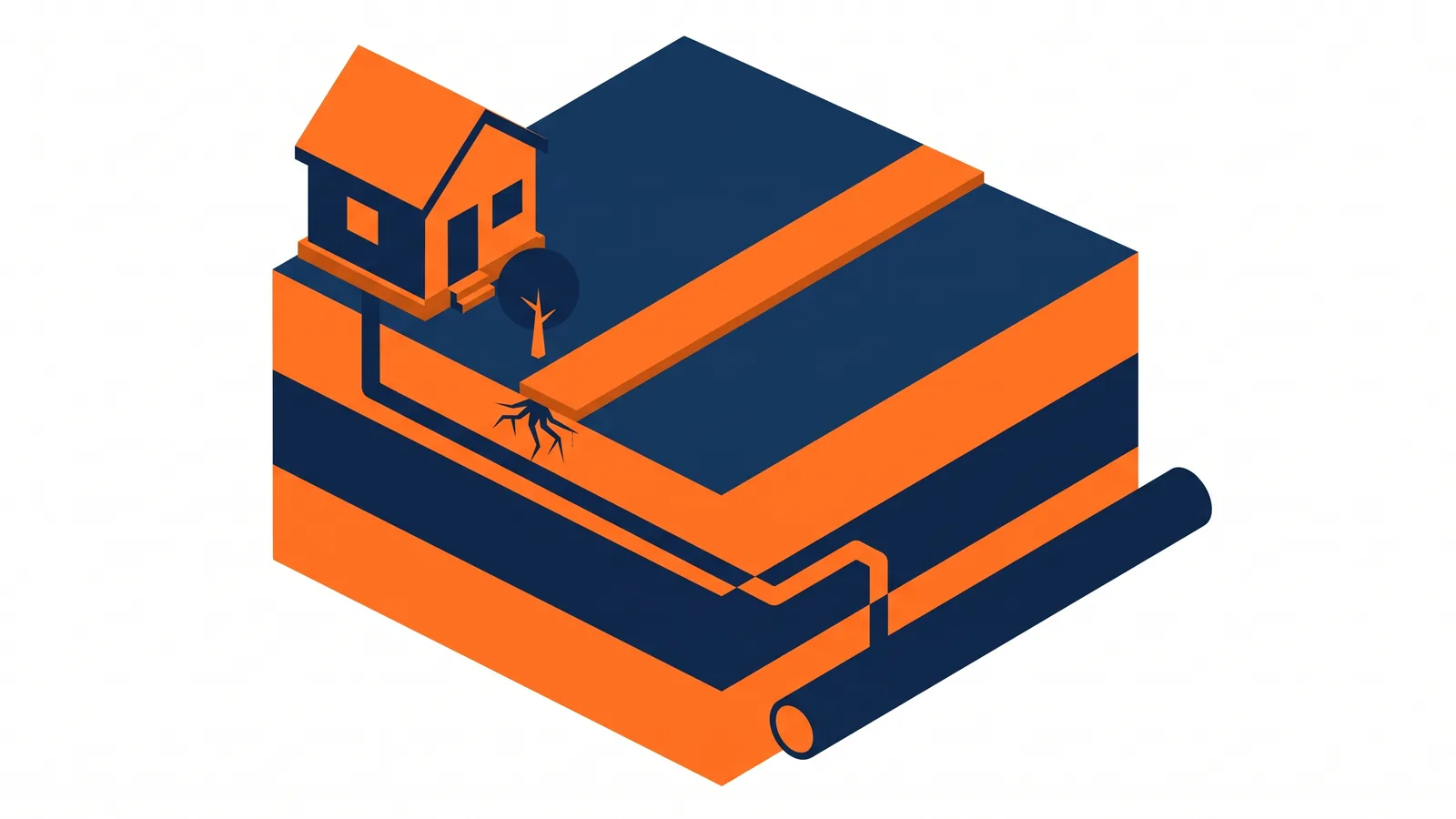
The three methods, and when each one wins
| Method | How it works | Where it wins |
|---|---|---|
| CIPP lining | A resin-saturated liner is inverted or pulled into the old pipe and cured in place, forming a new pipe inside it. | Host pipe intact but leaking at joints or cracked; pipe under slabs, driveways, mature trees. |
| Pipe bursting | A bursting head splits the old pipe outward while pulling a new fused pipe into its path. | Pipe too damaged to line; undersized line being upsized; you want fully new pipe without a trench. |
| Open excavation | Dig to the pipe, replace it, backfill and restore the surface. | Shallow pipe under open lawn; collapsed or badly bellied sections; spot repairs where one hole beats two pits. |
Per foot, the three methods cost about the same: the published ranges overlap almost completely. The ranges by method, whole-project figures and a worked 50 and 100 foot table are on the sewer line replacement cost page, each with its dated source.
“Trenchless is 30–50% cheaper” — checked
That claim circulates on contractor sites; we could not verify it in any independent published cost guide, and the published per-foot data contradicts it — trenchless per-foot prices sit at or slightly above open-cut. What the guides do support is narrower and more useful: trenchless avoids restoration. This Old House puts the two methods in the same per-foot band and locates the savings in landscape and hardscape repair after the job. So the honest comparison is: open-trench price plus its restoration line versus trenchless price. Under open lawn those can favor the trench; under a driveway they rarely do.
Source: This Old House (updated Mar 30, 2026). The 30–50% figure appears only in unverified contractor marketing; we don't publish it.
What the ground has to do with the choice
Rigid, jointed pipe — clay tile, cast iron — takes seasonal ground movement at its joints, and expansive clay moves a lot; that is where cameras find the offsets and separations that make old laterals fail in the first place. Both trenchless outcomes (a continuous liner, or fused pipe from bursting) eliminate most of those joints, which matters more in ground that moves. Whether your ground moves, and whether it corrodes iron pipe, is in the public soil survey: check your address. And before pricing any method on the street section, check whose pipe that section is.
Common questions
Is trenchless repair as durable as new pipe?
Pipe bursting literally installs new pipe, typically fused HDPE, so the result is a new continuous line. A cured-in-place liner is a resin pipe formed inside the old one; it slightly reduces diameter and depends on the host pipe holding its shape while the liner cures. Both are established methods used by cities on their own mains — the durability question to ask a contractor is about the specific product's rated life and warranty, in writing.
Can every broken line be fixed trenchless?
No. Lining needs a host pipe that still holds its round shape end to end — a fully collapsed or badly deformed section can't be lined through, and a significant sag (belly) stays a sag after lining. Pipe bursting needs room to pull the new pipe and gets complicated near other utilities and connections. This is why the camera footage comes first: the method is chosen from the pipe's actual condition, not from what the contractor's crew happens to do.
Why did I get one trenchless quote and one dig quote for the same pipe?
Often both are legitimate: companies quote the method they are equipped for. Per-foot prices overlap heavily, so the real comparison is total cost including restoration — concrete, landscaping, sidewalk — plus what each method does to your yard. Get the method, footage length and restoration scope in writing from both, and the comparison usually decides itself.
Does trenchless still need a permit?
Usually yes — lateral work is permitted in most cities regardless of method, and Angi's trenchless guide lists the permit as its own project line. In split-responsibility cities the section past your property line may need a separate right-of-way permit, or may not be your job at all — check your city's rule.
How long does trenchless sewer repair last?
Sewer pipe liners are rated to last up to 50 years (Angi trenchless guide, Jul 2026), with root intrusion the main long-term threat to a liner; pipe bursting installs new fused pipe, which carries the lifespan of new pipe. Ask for the specific product's rated life and the workmanship warranty in writing — 'trenchless' is a method, not a warranty term.
What are the disadvantages of trenchless sewer repair?
Lining slightly reduces the pipe's diameter and needs a host pipe that still holds its shape — a collapsed section can't be lined through, and a belly stays a belly under the new liner. Pipe bursting needs pulling room and gets complicated near other utilities and branch connections. And per foot, neither is cheaper than digging; the savings live in what doesn't get destroyed above the pipe.
Is trenchless sewer repair worth it?
When the pipe runs under a driveway, mature trees, hardscape or finished landscaping — usually yes, because the open-trench alternative carries a restoration bill the quote may underplay. Under open lawn, the math can flip and the trench can win. Price both with restoration itemized, and let the camera footage (which rules methods in or out) make the call.
Sewer Line Record is an independent reference built on public records and published sources. It is not an inspection, and nothing here states that a specific sewer line is failing, safe or code-compliant.
The method should come from the footage, not the truck
Lining, bursting and digging solve different failures at overlapping prices. The camera recording — which you should own — decides which one your pipe actually needs.
Independent reference · no obligation.
What a call is for
Read the quote or the camera verdict together. What was actually scoped, where the damage is, what method is being proposed — and whether you were given the footage.
Read the public record. Soil corrosivity and shrink-swell under the address from the USDA survey, and whether your city makes the lateral your problem at all.
Decide the next step. Sometimes a second camera scope from someone who does not sell repairs; sometimes a spot repair instead of a full dig; sometimes nothing.
Independent — no obligation.